What’s the Difference between Review & AggregateRating Schemas and Other Schema Types?
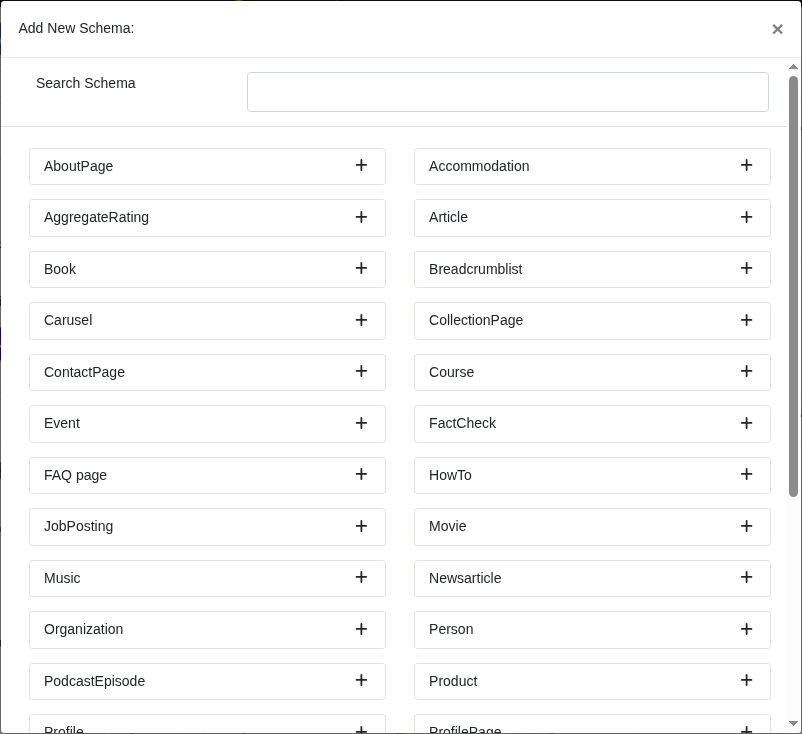
With the release of version 2.2.9 of Squirrly SEO’s Advanced Pack, we introduced two new schema types that you can build using the Rich Snippets feature, namely:
- “
Review” Schema - “
AggregateRating” Schema
You build these schemas in the Rich Snippets tab of the Squirrly SEO Snippet: open it from Squirrly > Optimize > Bulk SEO (click any dot in a post row, then the Rich Snippets tab) or from the Squirrly SEO Snippet in the post editor. To build a schema once and use it on many pages, use Squirrly > Reusable Schemas (Advanced Pack).
In this short tutorial, we’ll focus on what these two new schema types help you achieve and how they are different from other schema types that you can build using Squirrly, such as “Book,” “Course,” “Event,” and more.
More about the Review and AggregateRating Schemas
These schema types are used to provide structured data about reviews and ratings for a specific item, such as a product or a service.
- Review Schema. This schema type is designed to represent a short excerpt of a review or a rating of an individual item – for example, of a book, movie, recipe, or store.
- AggregateRating Schema. This schema type is designed to represent the average rating of an item – for example, of a book, movie, recipe, or store – based on multiple ratings or reviews.
Nesting a Review into Another Schema Type
When using Squirrly’s Rich Snippets feature, you’ll notice that many of the different schema types come with an additional “Review” option.
This option allows you to combine multiple structured data by adding one or more reviews within the chosen schema type.
So, for example, if you select the “Product” schema, you can incorporate multiple reviews for that particular product as part of the “Product” schema type.
This process is called nesting and describes the addition of other structured data types within the main structured data.
Nesting a review into another schema type is a common practice to provide detailed information about an item and user feedback simultaneously.
Here’s an example of a review that’s nested in a “Product” schema type.
<html>
  <head>
    <title>The Catcher in the Rye</title>
    <script type="application/ld+json">
    {
      "@context": "https://schema.org/",
      "@type": "Product",
      "brand": {
        "@type": "Brand",
        "name": "Penguin Books"
      },
      "description": "The Catcher in the Rye is a classic coming-of-age story: an story of teenage alienation, capturing the human need for connection and the bewildering sense of loss as we leave childhood behind.",
      "sku": "9780241984758",
      "mpn": "925872",
      "image": "https://www.example.com/catcher-in-the-rye-book-cover.jpg",
      "name": "The Catcher in the Rye",
      "review": [{
        "@type": "Review",
        "reviewRating": {
          "@type": "Rating",
          "ratingValue": "5"
        },
        "author": {
          "@type": "Person",
          "name": "John Doe"
        }
       },
      {
        "@type": "Review",
        "reviewRating": {
          "@type": "Rating",
          "ratingValue": "1"
        },
        "author": {
          "@type": "Person",
          "name": "Jane Doe"
        }
      }],
      "aggregateRating": {
        "@type": "AggregateRating",
        "ratingValue": "88",
        "bestRating": "100",
        "ratingCount": "20"
      },
      "offers": {
        "@type": "Offer",
        "url": "https://example.com/offers/catcher-in-the-rye",
        "priceCurrency": "USD",
        "price": "5.99",
        "priceValidUntil": "2020-11-05",
        "itemCondition": "https://schema.org/UsedCondition",
        "availability": "https://schema.org/InStock",
        "seller": {
          "@type": "Organization",
          "name": "eBay"
        }
      }
    }
    </script>
  </head>
  <body>
  </body>
</html>
Similarly, for “Events,” “Courses,” “Movies,” “Books,” and others, you can include one or more reviews, and Squirrly will automatically generate the “AggregateRating” schema from those reviews.
Standalone or nested Review and AggregateRating
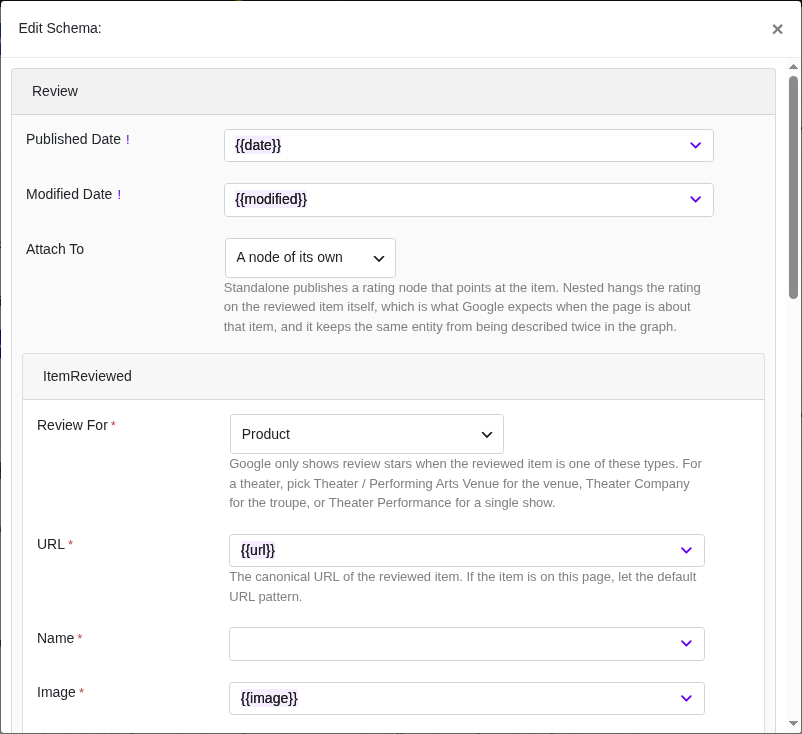
A Review or AggregateRating schema you build on its own has an Attach To option (an advanced field, Advanced Pack 2.5.12) with two choices:
| Attach To | What Squirrly prints |
|---|---|
| A node of its own (Standalone, the default) | The rating as a separate node that points at the item through itemReviewed |
| The reviewed item (Nested) | The review or aggregateRating inside the reviewed item, with no separate node |
The field help in the plugin says Nested “is what Google expects when the page is about that item, and it keeps the same entity from being described twice in the graph.” Every schema saved before this option existed uses Standalone.
Does Google Like You Adding One Structured Data inside another Type of Structured Data?
Here’s what Lizzi Sassman, tech writer at Google, had to say about this:
“Yep. Nesting your structure data can help us understand what the main focus of the page is. For example, if you put recipe and review at the same level, it’s not as clear as telling us that the page is a recipe with a nested review.
This means that the primary purpose of the page would be a recipe and that the review is a smaller component of that.”
*Source: Search Engine Journal